
A holistic curriculum designed to facilitate the development of children
The Montessori curriculum is designed to facilitate physical and cognitive development across five areas: Practical Life, Sensorial, Language, Maths and Culture.
At all times the focus is on developing skills of concentration, collaboration, self-discipline, and creative exploration. Working for as long as they wish on any single activity, children are in control of their own learning.
.jpeg)
Practical Life
The first area children are introduced to involves activities of everyday living, from pouring water to fastening buttons. Such activities promote care of self and care of the environment, fostering independence, enhancing self-esteem and helping children develop fine motor skills in a natural and enjoyable way.

Sensorial
The aim of the specially designed Sensorial materials is to refine the five senses, build muscle memory and encourage logical thinking. As well as enhancing skills of perception and observation, by making the child familiar with patterns and sequences many Sensorial activities indirectly serve as preparation for mathematics.
Language
Whether a child is a native English speaker or a beginner, the focus is on developing spoken language while building phonemic awareness through pre-literacy activities such as sound games. Children are then introduced to reading and writing via Montessori's phonetic approach, allowing them to gain confidence in sounding out letters and writing their own words before learning to read.

.jpeg)
Maths
Dr Montessori developed a unique method to help children grasp abstract ideas by using concrete materials. Each material in the Mathematics area introduces a different concept, enabling children to develop a solid understanding of numbers and quantity and consolidate their knowledge through repetition before moving on to the decimal system and the four operations.
Culture
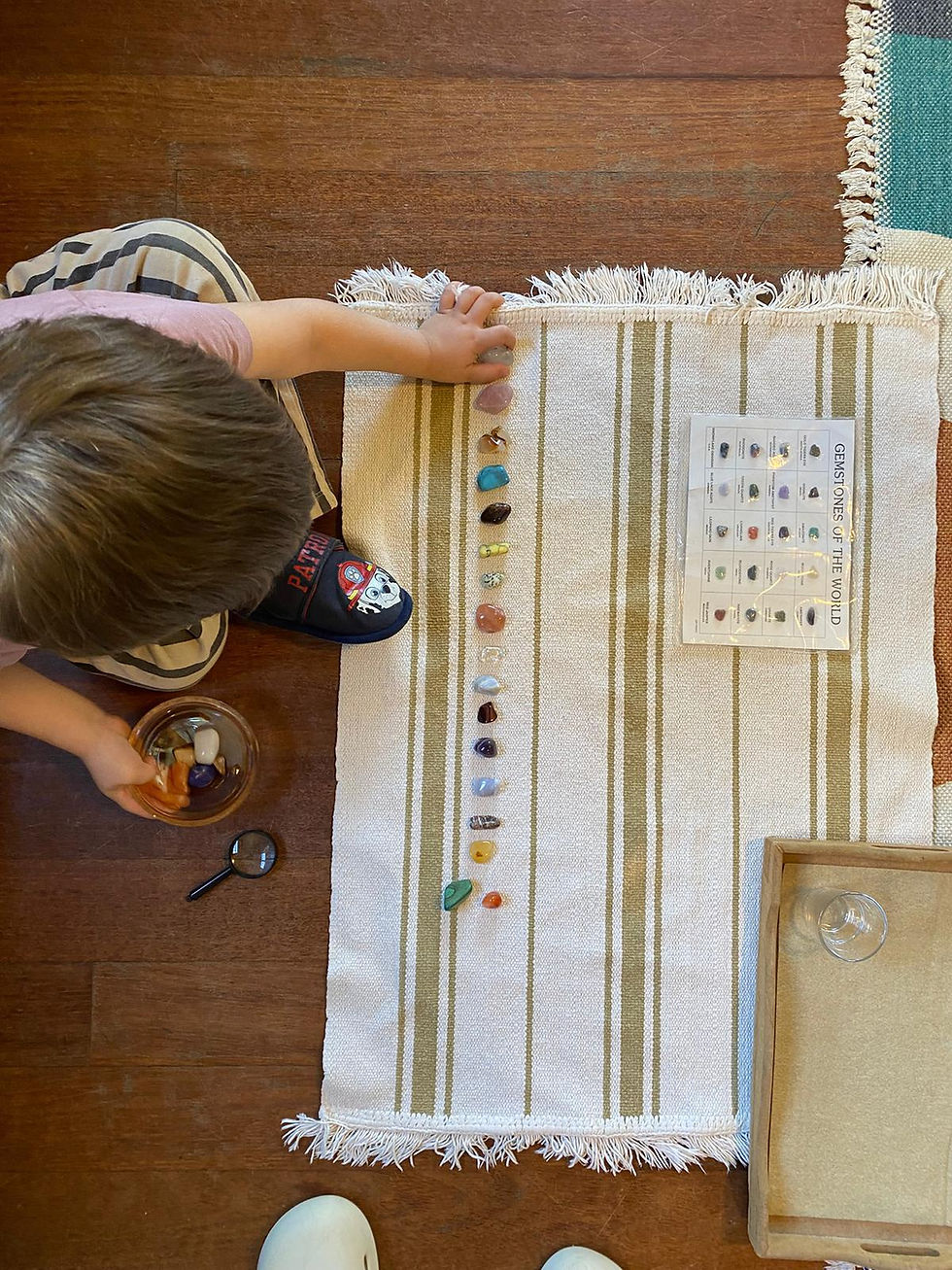
Culture encompasses subjects from botany, zoology and geography to scientific experiments and history, helping children make connections between different fields of knowledge and inspire them to discover their own interests. Whether it's the life cycle of the butterfly or an introduction to musical instruments, each activity is designed to spark curiosity and deepen children's knowledge of the world around them.
.jpeg)
.jpeg)
Creativity and Play
Creative activities are an important part of children's learning experience. Arts and crafts, singing songs, storytelling and play give them the chance to experiment with ideas or processes, helping them refine skills while taking pleasure in experimentation and self-expression.
.jpeg)
Outdoors
Contact with nature helps children develop a stronger understanding of the world around them. Exploration of the natural environment, gardening and play enrich and complement the indoor learning experience in a meaningful and joyful way.